Spanish Immersion Preschool - Multilingual Kinder and 1st grade
Text
5129159054
1511 S. Congress Ave


The founders of Academia Evolución come from a multi-generational family of educators deeply rooted in service, leadership, and academic influence. After studying Spanish and child psychology at the University of Massachusetts Amherst, Texas State University, teaching in Austin ISD before founding Academia Pre-escolar Spanish Immersion Preschool in 2011. Their teaching methods evolved from observing that students learned better through personalized centers, flexible grouping, and conversational instruction rather than rigid pacing. By adapting lessons to student interests and learning styles, classroom disruptions decreased while academic performance increased. These experiences became the foundation of the Academia educational model, which continues to evolve after 14 years of implementation.


PEDAGOGY
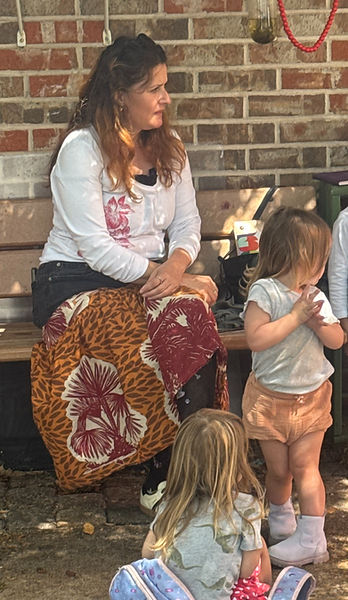
Academia’s pedagogy centers on collaboration, conversation, movement, and relationship-based learning that aligns with children’s natural curiosity and developmental stages. The program emphasizes outdoor education, small-group interactions, hands-on exploration, and guided conversations to help students absorb and apply information meaningfully. Lessons are presented through multiple teaching styles so students can approach concepts from different perspectives and learn according to their individual strengths. Multi-age learning environments encourage younger students to learn from older peers while strengthening leadership and social reasoning skills. Teachers act as guides, coaches, and conversational partners who observe student behavior and interests to personalize instruction and maximize engagement.
PHILOSOPHY
Academia Evolución believes learning is a constant evolutionary process driven by curiosity, conversation, and human connection. Teachers are expected to actively respond to student interests with guidance, questions, prompts, and challenges that help learners discover purpose and personal growth. The program prioritizes emotional safety, individualized learning, and relationship-building so students feel comfortable exploring new ideas and perspectives. Academic pacing is shaped by student engagement and ongoing dialogue between learners and educators. The school’s philosophy aims to cultivate lifelong curiosity, confidence, and self-motivated learning.
METHOD
The instructional method emphasizes cultural acceptance, communication, scaffolding, and community-centered learning through both indoor and outdoor educational environments. Most learning occurs outdoors where students can move freely, interact socially, and engage in hands-on academic experiences while teachers observe interests and developmental patterns. Lessons are individualized through interchangeable stations, small groups, movement activities, and guided conversations that adapt to student needs and attention levels. Teachers maintain routines and structured expectations while allowing flexibility for exploration, curiosity, and self-directed engagement. Observation, conversation, and consistent interaction are used to personalize instruction and strengthen vocabulary, reasoning, focus, and social development.
DISCIPLINE
Academia views discipline as guidance and redirection rather than punishment, believing positive instruction and engaging environments reduce disruptive behavior. Teachers are expected to model calm communication, empathy, consistency, and emotional regulation while helping students understand the impact of their actions. When behavioral issues arise, students are redirected toward individualized activities and conversations designed to rebuild focus, confidence, and self-awareness. Physical intervention is only used to ensure safety and is paired with calm reflection and restorative discussion afterward. The overall goal is to help students develop self-control, social awareness, and respectful problem-solving skills through communication and structured support.
MISSION
Academia’s mission is to cultivate curious, confident, socially aware learners who use communication and reasoning to navigate challenges constructively. The program encourages students to explore their interests early while developing academic, linguistic, cultural, and environmental awareness. Through individualized learning, multilingual instruction, and collaborative experiences, students are taught to think critically, work with others, and contribute positively to their communities. The school emphasizes leadership, global participation, and purposeful learning through real-world experiences and conversation-based education. Ultimately, the goal is to produce independent learners who approach life with confidence, discipline, and curiosity.
LANGUAGE
At the preschool level, Academia teaches entirely in Spanish, believing early immersion before age three maximizes vocabulary development and language confidence. Teachers consistently pair vocabulary with body language, actions, and repetition so students naturally associate language with meaning and routine. As students acquire language skills, educators encourage continued use of the second language through guided questioning and conversational reinforcement. The primary program follows a dual-language approach in which global subjects are taught in additional languages while locally relevant subjects remain in the native language. The objective is to prepare students for both local success and global communication.
EXPECTATIONS FROM CONVERSATIONALIST ADMINISTRATION AND PARENTS
Academia expects educators, administrators, parents, and students to contribute to a respectful, emotionally stable, and collaborative learning environment. Teachers are expected to be prepared, physically active, observant, patient, and highly communicative while maintaining strong relationships with students and families. Parents are encouraged to support routines, communicate openly, reinforce expectations at home, and trust the educational process. The school values creativity, leadership, health, environmental awareness, and individualized learning while emphasizing consistent observation and personalized assessment. Students are ultimately expected to be attentive, kind, socially aware, and committed to completing tasks and contributing positively to their community.